Latest price and news from the crypto space
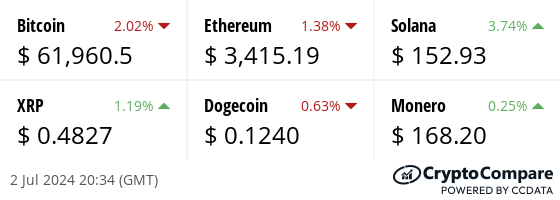
Latest price from our hand picked list of digital assets
 

The amount of bitcoin being bought by retail investors is growing, while the amount being bought by institutional investors has been decreasing, according to analysis published by JPMorgan.

A survey conducted by Mizuho Securities found that $40 billion of the $380 billion being distributed to Americans in direct stimulus checks could be used to buy bitcoin and stocks.

Signal, the startup behind a cross-platform encrypted messaging app, has started accepting cryptocurrency donations. Donations will be processed by The Giving Block, a crypto donations platform.

Top stories in the Crypto Roundup today:

  • Retail Bitcoin Buying Grows as Institutional Purchases Drop: JPMorgan
  • $40 Billion of Stimulus Money Could be Spent on Bitcoin and Stocks
  • Privacy Messaging App Signal Starts Accepting Crypto Donations
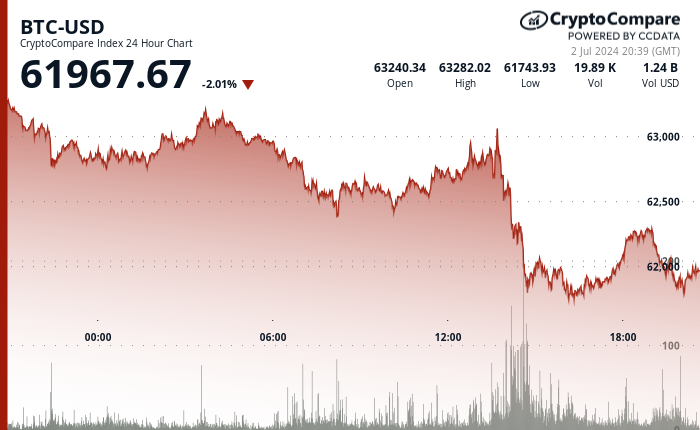
 
24 hours chart of the price of BTC
 

Retail Bitcoin Buying Grows as Institutional Purchases Drop: JPMorgan


Retail investment in bitcoin is growing, while the amount being bought by institutional investors has been decreasing, according to analysis published by JPMorgan.

The analysis, conducted by JPMorgan strategist Nikolas Panigirtzoglou, shows that retail investors bought 187,000 BTC this quarter, while institutional investors bought 173,000 BTC. Last quarter, retail investors bought 205,000 coins, compared to 307,000 bought by institutions.

To get to its estimates on retail inflows the analysts used data from Square and PayPal, and used announcements from institutions, data from futures trading platforms, and more to get to its institutional inflows figure. The analysis reads:

"While the bitcoin flow picture was dominated by institutional investors during Q4 2020, the flow picture has been more equally balanced between retail and institutional investors in the current quarter echoing Q3 2020.”

In dollar terms, retail and institutional bitcoin buys were nearly equal, at $7.5 billion each. In the previous quarter, institutional buys were about 60% above retail buys. Growing retail interest in BTC comes as stimulus checks worth $1,400 are distributed in the U.S. as part of a $1.9 trillion COVID-19 relief package.

 
Read More
 

$40 Billion of Stimulus Money Could be Spent on Bitcoin and Stocks


A survey conducted by Mizuho Securities found that $40 billion of the $380 billion being distributed to Americans in direct stimulus checks could be used to buy bitcoin and stocks.

Mizuho managing director Dan Dolev and his team surveyed approximately 235 individuals with less than $150,000 in household income, and found that 200 expect to receive a third stimulus check in the next few days. About 2-in-5 recipients expect to use a portion of the funds to invest.

Most respondents even revealed they prefer bitcoin over stocks. Dolev wrote:

“The survey predicts that bitcoin will account for 60% of total incremental investment spend. We calculate it could add as much as 2-3% to bitcoin's current $1.1 trillion market value.”

Apart from bitcoin, the stocks that could benefit the most from people investing their stimulus funds in equities include Visa, MasterCard, PayPal, and Square.

 
Read More
 

Privacy Messaging App Signal Starts Accepting Crypto Donations
 

Signal, the startup behind a cross-platform encrypted messaging app, has started accepting cryptocurrency donations. Donations will be processed by The Giving Block, a crypto donations platform.

Signal tweeted:

"As a nonprofit organization, we depend on your support. If you've been patiently waiting for Signal to accept cryptocurrency donations, you no longer need to hodl back your generosity.”

Users can donate in BTC, ETH, LTC, and some other cryptocurrencies. If users choose to receive a tax deduction for their cryptocurrency donations, they can provide an email address to receive a tax receipt.

 
Read More
 

Polkadot: A Healthy Developer Community


Polkadot offers a scaling solution to one of the most pressing challenges facing Ethereum: scalability. It provides an alternative to Ethereum 2.0, although it is not a direct competitor. Dr. Gavin Wood, who co-founded Ethereum and created Polkadot, highlights a number of conceptual differences between Polkadot and Ethereum 2.0.

With that said, Polkadot also uses sharding to address a number of blockchain architecture challenges.[1] It establishes a main chain, the “relay chain,” to which separate shards or “parachains” can connect. The relay chain is a proof-of-stake (PoS) system; in conjunction with validators, it provides security to the various parachains and enables on-chain governance.

Polkadot launched in May 2020, drawing attention from well-known projects such as Chainlink. According to Dr. Wood’s year-end review of the Polkadot ecosystem, “Polkadot is now the 2nd most active DeFi ecosystem after Ethereum (and growing fast)”. Retail investors have taken note in 2021; year-to-date, DOT is up nearly 400%.

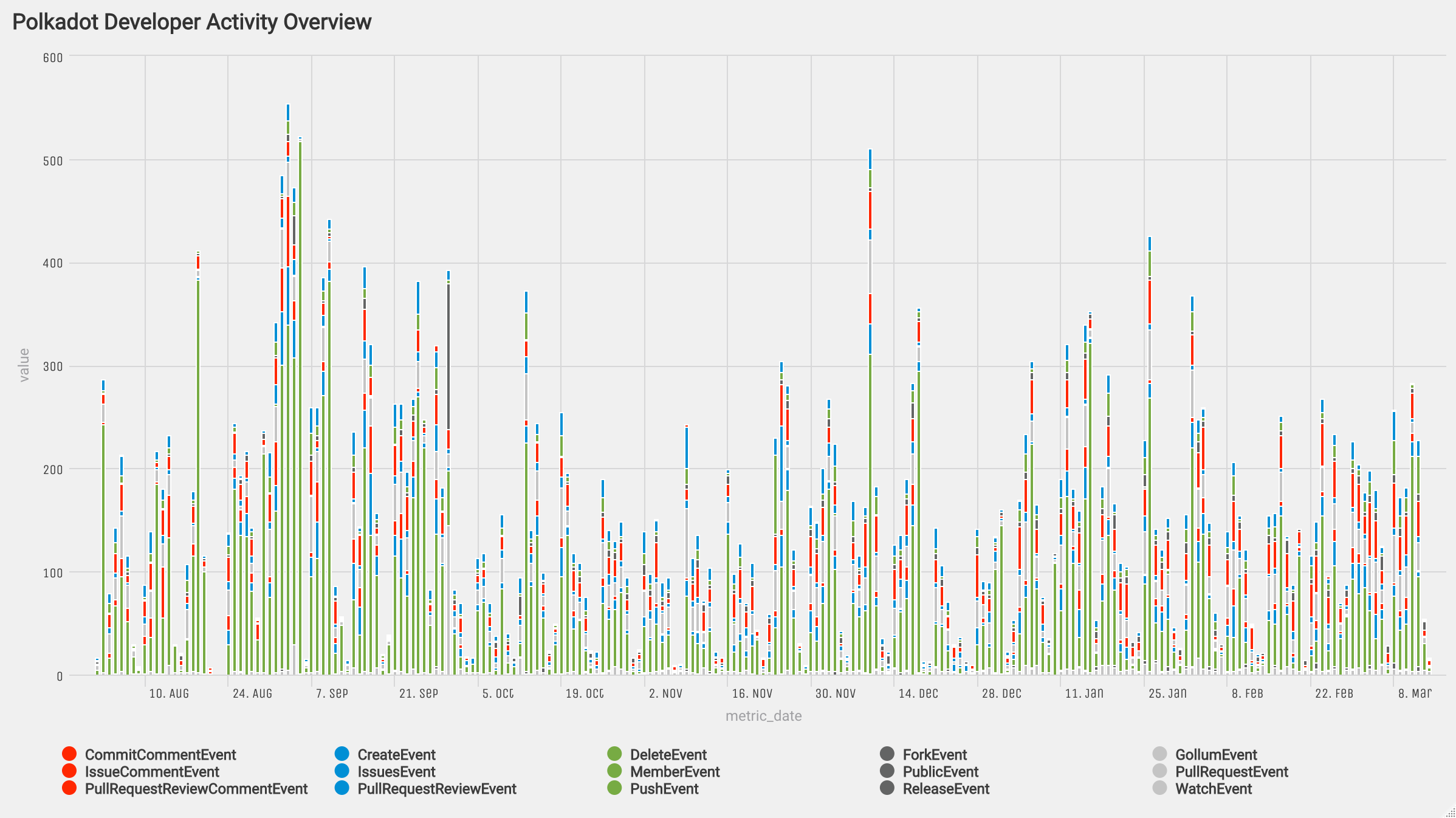
Looking at Polkadot, we see that its recent developer activity compares favorably to the cream of the crop — the top-ranking projects in the crypto universe. Polkadot shows consistent contributions (i.e. surges of activity), indicating a dedicated developer community that stays committed to the project over time.

 
Read More

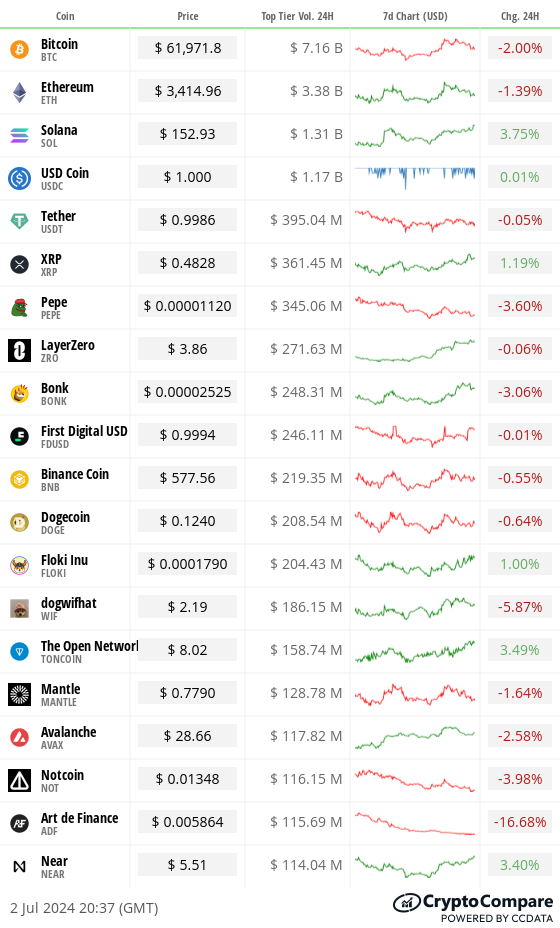
State of the Crypto by Top Tier Exchange Volume

Toplist 20 coins by top tier volume

Build your project with CoinDesk Data

 
social icon twitter social icon linkedin
 

Terms | Privacy

13 Charles II St, SW1Y 4QU

London, UK

This email may include advertisements by third parties. None of the advertised or promoted products and services have been verified or approved by us and this email is not any endorsement by us of the third party or of their products or services.


Download our App from the google play store
 
 
Download our App from the apple store