Latest price and news from the crypto space
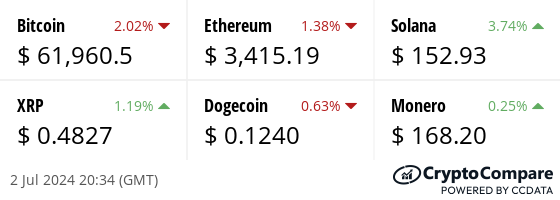
Latest price from our hand picked list of digital assets
 

On April 17, U.S. Senators Kirsten Gillibrand (D-NY) and Cynthia Lummis (R-WY) introduced the bipartisan Lummis-Gillibrand Payment Stablecoin Act, which proposes a comprehensive regulatory framework for stablecoins. This new legislation is designed to enhance consumer protection, promote responsible financial innovation, combat illegal finance, protect American interests, address custody issues, and support the dual banking system.

Bloomberg ETF Analyst Rebecca Sin has shed light on the potential challenges and prospects facing the newly approved spot Bitcoin and Ether ETFs in Hong Kong. According to Sin, mainland Chinese investors are likely to face significant barriers when it comes to accessing these funds due to existing restrictions on investing in virtual assets. 

Kraken has launched a new open-source mobile wallet, offering a secure and transparent solution for managing digital assets. Developed with a focus on user privacy and open-source principles, Kraken Wallet aims to address key challenges in mobile crypto storage, such as secure key management and transaction signing, which are often hindered by mobile operating systems' limitations.

Top stories in the Crypto Roundup today:

  • Senators Gillibrand and Lummis Spearhead Bold Legislation to Regulate Stablecoins in the U.S.
  • Mainland Chinese Investors Likely Barred from Hong Kong's Spot Bitcoin and Ether ETFs, Says Bloomberg Analyst
  • Kraken Launches Open Source Mobile Crypto Wallet
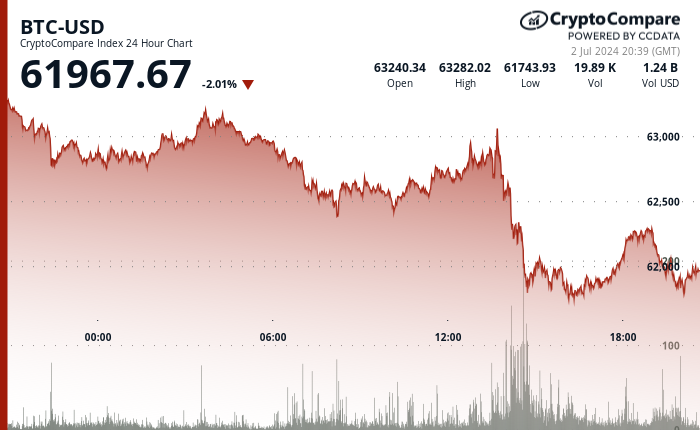
 
24 hours chart of the price of BTC
 

Senators Gillibrand and Lummis Spearhead Bold Legislation to Regulate Stablecoins in the U.S.


On April 17, U.S. Senators Kirsten Gillibrand (D-NY) and Cynthia Lummis (R-WY) introduced the bipartisan Lummis-Gillibrand Payment Stablecoin Act, which proposes a comprehensive regulatory framework for stablecoins. This new legislation is designed to enhance consumer protection, promote responsible financial innovation, combat illegal finance, protect American interests, address custody issues, and support the dual banking system.

The act requires stablecoin issuers to establish subsidiaries dedicated to the issuance of stablecoins, adhere to strict capital and reserve requirements, and maintain one-to-one reserves. This ensures all stablecoins are fully backed by cash or cash equivalents while outright banning the issuance of unbacked, algorithmic stablecoins. 

The legislation outlines a clear regulatory framework that facilitates the use of stablecoins for instant global payments, supporting the development of new applications offering enhanced control over personal finances and the potential to reduce transaction fees, particularly for international remittances.

Overall, the bill seeks to standardize rules for dollar-denominated stablecoins globally, reducing the risk of their use for illicit financing. It also aims to establish severe penalties for entities issuing USD-denominated stablecoins without compliance with U.S. financial crimes regulations.

The legislation mandates that stablecoin issuers, including state trust companies or depository institutions, act as legal custodians of record for payment stablecoins and their reserves, enforcing strict asset segregation.

 
Read More
 

Mainland Chinese Investors Likely Barred from Hong Kong's Spot Bitcoin and Ether ETFs, Says Bloomberg Analyst


Bloomberg ETF Analyst Rebecca Sin has shed light on the potential challenges and prospects facing the newly approved spot Bitcoin and Ether ETFs in Hong Kong. According to Sin, mainland Chinese investors are likely to face significant barriers when it comes to accessing these funds due to existing restrictions on investing in virtual assets. 

Despite the possibility of using the $50,000 remittance quota for retail investors, it remains an underutilized avenue for such investments. Furthermore, she says the prospects for institutional investors using the Qualified Domestic Institutional Investor (QDII) quota appear dim, as approvals for virtual asset ETFs under this scheme are not expected.

Sin also projects that the new spot Bitcoin and Ether ETFs could potentially amass up to $1 billion in assets under management. However, achieving this milestone is contingent upon the pace of improvements in both infrastructure and the broader ecosystem surrounding these products. For context, the Asia-Pacific region's Bitcoin ETFs, which are split between three funds in Hong Kong and two in Australia, currently manage a total of $250 million in assets.

The introduction of these ETFs marks a significant development for the issuers involved—Bosera Asset Management, Harvest International, and ChinaAMC. Notably, these firms will be the pioneers in launching spot Bitcoin and Ether products in the region.

 
Read More
 

Kraken Launches Open Source Mobile Crypto Wallet


On April 17, Kraken launched its innovative open-source mobile wallet, offering a secure and transparent solution for managing digital assets. Developed with a focus on user privacy and open-source principles, Kraken Wallet addresses key challenges in mobile crypto storage, such as secure key management and transaction signing, which are often hindered by mobile operating systems' limitations.

According to Eric Kuhn, Kraken's Product Director, the wallet utilizes a pure-js implementation of NodeJS's crypto module to leverage the device’s Cryptographically Secure Pseudorandom Number Generator (CSPRNG) for generating keys. It adheres to the BIP39 standard, allowing for straightforward backup and recovery of mnemonic seeds, enhancing compatibility across the crypto ecosystem.

For security, private keys are stored in the device’s Keychain (iOS) or Keystore (Android), with other data encrypted in the app’s database using Realm. Kraken Wallet features several layers of security measures, including app lock, password protection, database encryption, and lockout mechanisms against brute-force attacks. It also supports biometric authentication for critical operations like enabling app locks or connecting to decentralized applications (dApps).

Innovatively, the wallet uses transaction simulation to warn users about potential risks and validates addresses and fees to prevent common errors. To safeguard user privacy and prevent IP address leaks, Kraken Wallet proxies requests through an API gateway, keeping blockchain data querying secure and private.

The wallet's design principles are rooted in the crypto community's ethos of transparency and minimal trust. The source code is available under the MIT license, allowing users to inspect and verify its security. Furthermore, an external audit by Trail of Bits confirms the robustness of the wallet’s security features. Kraken Wallet currently supports multiple blockchains, including Bitcoin, Ethereum, and Solana.

 
Read More

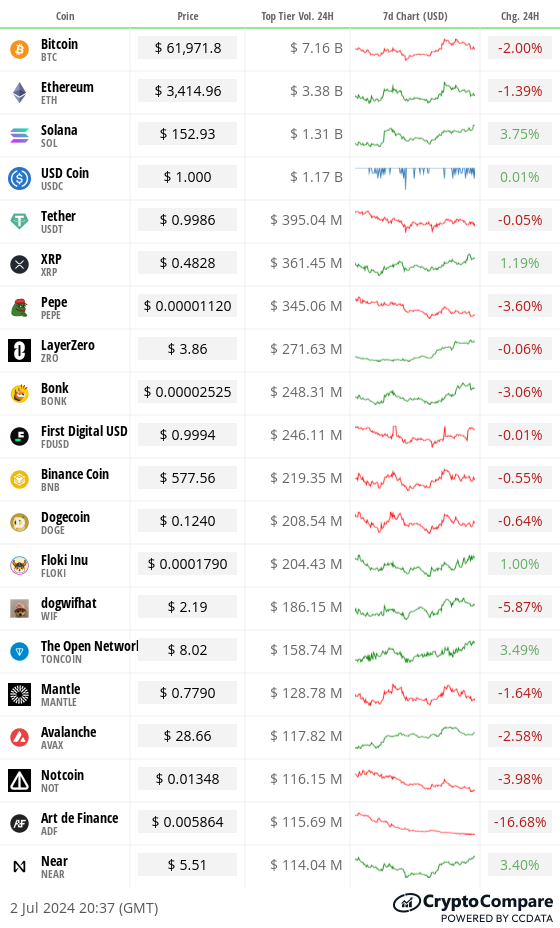
State of the Crypto by Top Tier Exchange Volume

Toplist 20 coins by top tier volume

Build your project with CoinDesk Data

 
social icon twitter social icon linkedin
 

Terms | Privacy

13 Charles II St, SW1Y 4QU

London, UK

This email may include advertisements by third parties. None of the advertised or promoted products and services have been verified or approved by us and this email is not any endorsement by us of the third party or of their products or services.


Download our App from the google play store
 
 
Download our App from the apple store